
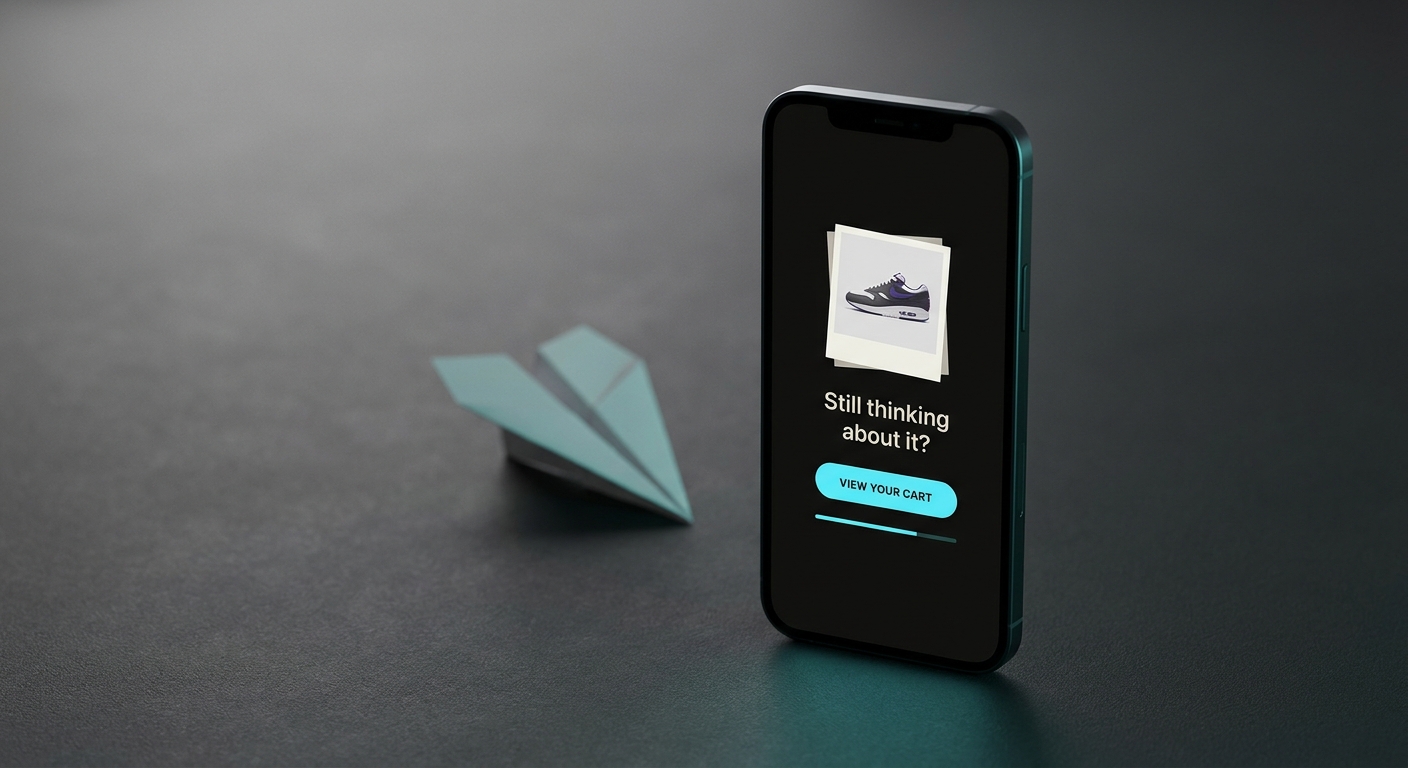
The best abandoned cart app for Shopify is not one app, it is a decision about how far past Shopify's free tools your store actually needs to go. Shopify already sends a basic recovery email for free. A full email platform like Klaviyo or Omnisend adds timed sequences, segmentation, and SMS. Dedicated apps like Cartly do one job, recovery, and do it cheaply. This guide sorts the options by the job each one does, shows current pricing, and then covers the part every roundup skips: making the recovery emails good enough to actually win the sale back.
Carts get abandoned constantly. The average documented online shopping cart abandonment rate is 70.22%, according to Baymard Institute's review of 50 separate studies. That is the recovery opportunity sitting in every Shopify store, and the app you choose is only the delivery truck for it.
Do you actually need an abandoned cart app on Shopify?
Maybe not yet. Shopify has recovery built in for free. When a shopper reaches checkout, enters an email, and then leaves without paying, Shopify can automatically send them a recovery email with a link back to their cart. You can turn it on in your marketing settings and choose how long to wait before it sends.
The catch is that it is one email and nothing more. There is no second reminder, no third email with an offer, no branching by customer type, and the design is limited to Shopify's basic editor. It also will not send in some cases, like when an item goes out of stock before the email fires.
So the honest answer: if you are a new store doing your first sales, switch on the free native email and move on. You do not need to pay for an app to send one reminder. You start needing an app the moment you want a real sequence, better design, or SMS, because a single generic email leaves most of the recoverable revenue on the table.
How much money is abandoned cart recovery really worth?
Enough to justify getting it right, and less than the hype if you send one weak email. Two numbers set the range.
On the upside, abandoned cart automation is one of the highest-earning emails a store can run. In Omnisend's 2025 benchmark, drawn from more than 27,000 brands, abandoned cart automations earned an average of $3.59 in revenue for every email sent, second only to welcome and back-in-stock emails.
On the reality-check side, only 22.5% of brands in that same dataset actually run an abandoned cart automation. The revenue is real, but it belongs to the stores that set the sequence up and keep the emails on-brand, not to the ones that switch on a template and forget it.
What are the four types of abandoned cart apps?
Every roundup lists a dozen apps in one flat pile. That is the wrong way to choose, because these tools do not all do the same job. Sort them into four groups and the decision gets simple.
- Native Shopify recovery. Free, built in, one automated email. The right starting point for a brand-new store.
- Full email platforms (ESPs). Klaviyo, Omnisend, and similar. These run your whole email program: sequences, segmentation, SMS, and other flows like welcome and post-purchase. You are buying a marketing engine, and cart recovery is one flow inside it.
- Dedicated recovery apps. Cartly (Care Cart), Recapture, and others. They focus on recovery, often bundle web push and popups, and cost less than a full ESP. Good when recovery is the main thing you want and you are not ready to run a full email platform.
- The campaign-generation layer. This is the group the roundups miss. Tools in this group do not send the email, they write and design it from your real products and brand, then hand it to your ESP. It matters because the delivery app is rarely the problem. The blank, off-brand email is.
Most store owners think they are choosing between apps in groups one to three. In practice the thing that decides whether recovery works is group four: whether the emails read like your store or like a stock template.
Which abandoned cart app is right for your store?
Match the app to your stage, not to a review score. Pricing below is current at the time of writing; check each app's page before you commit, since plans change.
- Brand-new store, no budget: Shopify's native recovery email. Free, already in your admin, one email. Turn it on today.
- Recovery is all you want, still on a budget: Cartly (Care Cart). Free tier covers 100 recovery emails a month, the Pro plan is $14.99 a month for unlimited, and it carries a 4.8-star rating across 231 Shopify App Store reviews. It adds web push and email popups in the same app.
- You want your whole email program in one place: Omnisend or Klaviyo. Omnisend's free plan covers 250 contacts and 500 emails a month, with the Standard plan starting at $11.20 a month for 6,000 emails. Klaviyo's free plan also covers 250 profiles and 500 sends a month and is the deepest option for segmentation once you grow. Both run cart recovery as one flow among many.
- You already run Klaviyo or Omnisend: do not switch apps. Your delivery problem is already solved. Your remaining problem is that writing on-brand recovery emails every week is slow, which is a content problem, not a software one.
That last case is the common one, and it points at the real gap.
What makes an abandoned cart email actually recover the sale?
Not the app. The email. A shopper who added to cart already wants the product, so the recovery email does not need to re-sell it, it needs to feel like it came from the store they were just buying from and give them a clean path back. Three things decide that.
A real sequence, not one email. Send two or three, timed, each with its own job.
Email 1  (~1 hour)   Plain reminder. No discount. "You left something behind."
Email 2  (~24 hours) A nudge. Light urgency, show the product, maybe reviews.
Email 3  (~48-72 hr) Optional incentive. The only email that carries an offer.
On-brand design and copy. The email should use your products, your voice, and your look, not a generic template with your logo dropped in. This is what separates a recovery email that converts from one that reads as spam. If you want the exact wording for each step, see our guide to abandoned cart email subject lines, which maps a subject and preview line to every email in the sequence.
Discipline on discounts. Keep the offer in the final email only. If your first reminder already shouts a code, you teach shoppers to abandon carts on purpose to get the discount.
This is where JetFlow fits, and it is worth being precise about how. JetFlow is not a recovery app that watches for abandonment and sends the email. Your ESP or Shopify still owns the trigger and the timing. What JetFlow does is read your store's real products, branding, and data and generate the on-brand campaign emails and popups for you, then push them into Klaviyo. For abandoned carts, that means the recovery emails in your Klaviyo flow look and sound like your store instead of a stock template, and they get written in minutes instead of sitting on a to-do list. It sits alongside Klaviyo, not in place of it.
So the full answer to "which abandoned cart app should I use" is two answers. Pick the delivery tool that matches your stage, from Shopify's free email up to a full ESP. Then make sure something, or someone, keeps the emails on-brand and actually shipped, because that is the part that recovers the sale.